#docker#devops#containers#cloud
When to Use Docker and When to Avoid It
A practical guide to understand when Docker is the ideal solution for containerizing applications and when to adopt simpler or traditional alternatives
•4 minutes read
A practical guide to understand when Docker is the ideal solution for containerizing applications and when to adopt simpler or traditional alternatives
Docker has transformed the way we develop, deploy, and manage applications. Containers allow running software in isolated, portable, and consistent environments, regardless of the platform.
However, it's not a universal solution for every context. In this article, we analyze when to adopt Docker and when it's appropriate to avoid it.
This guide is designed for developers, DevOps teams, and companies evaluating Docker adoption in professional environments.
Docker allows creating a uniform runtime environment, simplifying deployment across different platforms. Each container includes only what's needed to run the application, reducing conflicts and dependencies.
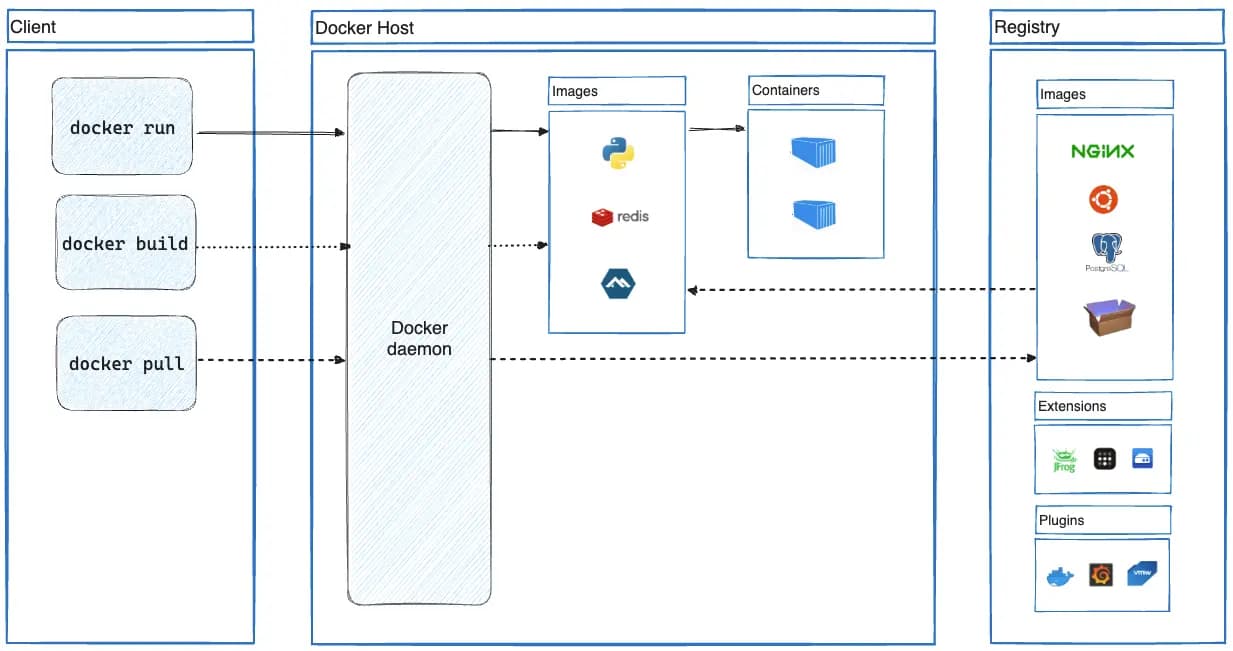
Docker is ideal in scenarios requiring portability, scalability, and reproducibility.
If you're building a modern architecture based on independent services, Docker makes it easy to distribute and scale them.
docker run -d -p 8080:80 nginx
Docker eliminates the classic "works on my machine" problem. Every team member uses the same environment.
If you do continuous and automated releases, containers enable reliable and predictable CI/CD pipelines.
Docker was designed to integrate with Kubernetes, Nomad, ECS, and other platforms.
Docker can extend the life of existing software, simplifying distribution and provisioning.
Use Docker when portability and reproducibility are priority requirements over infrastructural simplicity.
Despite the advantages, Docker introduces complexity that's not always worth managing.
If the application is small and runs well on a standard server, using Docker can be unnecessary overhead.
Each container adds a layer of overhead, especially with orchestrators.
Computationally intensive or I/O operations might have non-negligible penalties.
Docker requires dedicated skills for security, networking, logging, and storage.
Some industries have strict restrictions requiring less dynamic architectures.
Docker doesn't replace proper application architecture. It can simplify it, but not solve structural problems.
A minimal example for Node.js applications:
FROM node:18-alpine

WORKDIR /app

COPY package*.json ./
RUN npm install

COPY . .

EXPOSE 3000

CMD ["npm", "start"]
To orchestrate multiple services locally or in dev:
version: '3.8'

services:
  web:
    build: .
    ports:
      - '3000:3000'
  redis:
    image: redis:7
Compose allows defining replicable environments with a single command.
Docker scales well, but requires adequate infrastructure and governance.
When to evaluate alternative tools:
Docker is a powerful tool for building distributed, scalable, and standardized architectures. It's ideal for modern teams, rapid release cycles, and distributed cloud scenarios.
It's not always the best choice for simple projects, with limited resources, or that don't benefit from containerization.
Useful resources: